- AI Report by Explainx
- Posts
- This AI Chip Reduces Energy Use by 10,000x
This AI Chip Reduces Energy Use by 10,000x
Extropic’s heat-driven AI chips slash energy costs, Perplexity Patents makes research conversational, and OpenAI’s Aardvark autonomously hunts bugs for safer, smarter code.

Yash Thakker
October 31, 2025
The AI frontier just got sharper, smarter, and more self-sustaining than ever. Extropic’s heat-powered AI chips redefine efficiency, Perplexity brings natural-language patent discovery to everyone, and OpenAI’s autonomous security researcher takes on bugs before they strike, each pushing intelligence closer to how nature, science, and creativity truly work.
🔥 Extropic TSU: AI That Thinks in Heat – Extropic unveils the Thermodynamic Sampling Unit, a revolutionary chip that uses heat-driven probabilistic computing to achieve up to 10,000× energy efficiency over GPUs, promising a sustainable future for generative AI and simulation workloads.
🔍 Perplexity Patents: Ask, Find, Cite – The new conversational patent AI lets users search, analyze, and explore prior art in natural language, linking directly to documents, papers, and code for effortless innovation intelligence.
🛡️ OpenAI Aardvark: Autonomous Bug Hunter – Powered by GPT-5, Aardvark continuously scans codebases to detect, test, and patch vulnerabilities in real tim, reducing false positives and fortifying software security through AI-driven reasoning and collaboration.
From thermodynamic AI to intelligent research and self-healing code, the next wave of AI isn’t just powerful, it’s efficient, insightful, and built for trust.
Extropic Unveils AI Chip That Uses Heat, Slashing Energy Costs
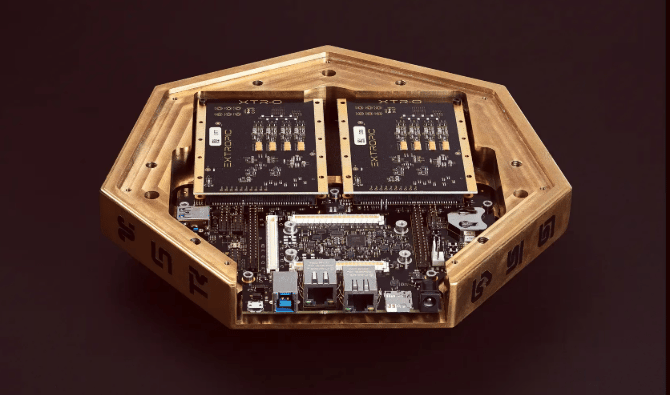
Extropic has developed a revolutionary new type of energy-efficient AI hardware called the Thermodynamic Sampling Unit (TSU), which is designed to sample directly from complex probability distributions rather than performing traditional deterministic computations like GPUs. TSUs consist of large arrays of transistor-based probabilistic bits (pbits) that generate tunable random signals, enabling them to implement energy-based models natively using Gibbs sampling. Their prototype platforms, such as the X0 chip and the XTR-0 development system, demonstrate that TSUs can perform these probabilistic operations with drastically reduced energy consumption, potentially up to 10,000 times more efficient than GPUs on generative AI workloads. By minimizing energy-intensive data movement and relying on localized circuit communication, TSUs promise a scalable path forward for AI hardware that overcomes current energy constraints. Extropic is further developing scalable chips for mass production and providing open-source tools like the 'thrml' Python library to accelerate algorithm research, aiming to transform both AI and other probabilistic computing applications such as simulations in biology and chemistry.
Perplexity Patents: Ask, Find, Cite

Perplexity has launched Perplexity Patents, a conversational AI agent that lets anyone search and analyze patents in natural language with citations and an inline viewer, keeping context across follow-up questions for deeper exploration. It uses an agentic retrieval system and a specialized patent knowledge index to go beyond rigid keyword matching and surface relevant prior art, while also pulling in academic papers, code, and blogs when helpful. The product is in free worldwide beta with higher usage quotas and model options for Pro and Max subscribers, making patent intelligence faster and more accessible to engineers, researchers, practitioners, and business teams. Users can ask broad or comparative questions, receive clustered results with direct links to original documents, and follow guided suggestions to expand research paths without crafting complex Boolean queries—streamlining prior art discovery and competitive scans.
Autonomous Bug Hunter: Aardvark
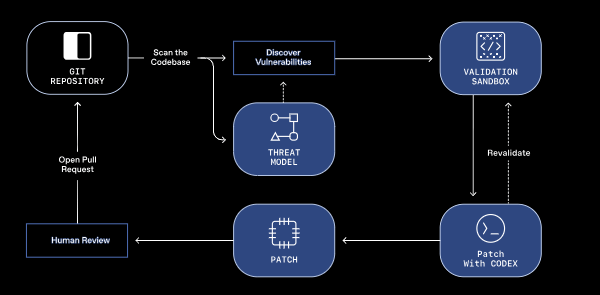
OpenAI’s Aardvark, powered by GPT-5, is an autonomous security researcher in private beta designed to revolutionize software security by continuously analyzing code repositories to identify vulnerabilities, build contextual threat models, and scan code commits in real time. Unlike traditional static analysis tools, Aardvark uses large language model reasoning and runs tests in sandboxed environments to confirm exploitability, minimizing false positives. It generates clear patches with explanations using OpenAI Codex, which developers can review and apply seamlessly within existing workflows. Tested internally and by partners, Aardvark has identified 92% of known and synthetic vulnerabilities in benchmark repositories, while also detecting logic flaws and privacy issues. OpenAI plans to offer pro-bono scanning for selected non-commercial open-source projects to enhance ecosystem security. This agent acts autonomously yet prioritizes human review and collaboration, representing a breakthrough in proactive and scalable AI-driven vulnerability detection and remediation that helps developers secure software without slowing innovation.
Hand Picked Video
In this video, we’ll look at how BG Blur has completely transformed over the past few months — from a simple blur tool to a powerful AI video enhancer. You’ll see the new minimal design, smarter background blur, privacy upgrades, and live preview features in action. Watch till the end to see how this update changes everything for creators!
Top AI Products from this week
Superinbox - SuperInbox unlocks email vibing for everyone. AI learns your writing style and drafts perfect email replies + auto-organizes your Gmail/Outlook inbox. No new app needed. Busy professionals save 2+ hours daily handling their emails effortlessly.
ScaryStories Live - Experience storytelling like never before. ScaryStories Live transforms your ideas into live, AI-generated story scenes that evolve as you direct them. Perfect for creators, streamers, or anyone exploring the future of interactive storytelling.
Usage4Claude - An elegant macOS menu bar app for real-time monitoring of your Claude AI usage.
Mico - Mico is a new animated persona for Microsoft Copilot's voice mode. It adds visual expressions like smiles and nods to make conversations feel more natural and adaptive. Powered by Copilot, Mico reacts in real-time and can be personalized with different colors.
Skyvern - Skyvern is an open source no-code web agent builder that helps you build AI agents that can browse the web and take actions. Skyvern's agents score a state-of-the-art on the WebBench benchmark.
FormAI - AI gym bro with eyes. Sees what machine you're using, roasts your form (nicely), prevents injuries, and plans your whole session. Real-time corrections + next exercise recommendations. Like having a coach who actually watches you.
This week in AI
IBM launch Granite 4.0 Nano - IBM's smallest AI models, optimized for edge and on-device use, advancing AI efficiency and tool integration for developers.
Canva Creative OS Empowers Imagination - Canva's AI-powered suite streamlines video editing, branded emails, forms, and real-time team collaboration, making design workflows seamless and intelligent.
Composer Fast AI Coding Agent - Composer by Cursor is a frontier AI coding model specialized for software engineering, delivering 4x faster code generation with advanced tool use and long-context understanding, boosting developer productivity in real-time interactive workflows.
SWE-1.5 Fast AI Coding Agent - Cognition's SWE-1.5 delivers near-state-of-the-art coding performance at up to 950 tokens/sec, 13x faster than Sonnet 4.5, optimized for real-world software engineering tasks on Windsurf.
Superhuman AI Beyond Writing - Grammarly rebrands as Superhuman, launching an AI suite including Grammarly, Coda, Superhuman Mail, and proactive assistant Superhuman Go, enhancing productivity seamlessly across apps
Paper of The Day
The paper "The Era of Agentic Organization: Learning to Organize with Language Models" introduces AsyncThink, a new reasoning paradigm where a single large language model acts as both an organizer and multiple workers. The organizer dynamically assigns sub-queries to workers, enabling concurrent and collaborative thinking structured through Fork and Join actions. This asynchronous approach reduces inference latency by 28% compared to parallel thinking while improving accuracy on reasoning tasks like multi-solution countdown and math problems. AsyncThink generalizes well to unseen tasks such as Sudoku and adapts its thinking structure via reinforcement learning. This marks a step towards agentic organization, where AI agents form dynamic, collaborative systems for complex problem-solving beyond individual intelligence.
To read the whole paper 👉️ here