- AI Report by Explainx
- Posts
- OpenAI Fixes Browser Hacking
OpenAI Fixes Browser Hacking
OpenAI hardens agentic browsers against hacks, xAI launches Grok Collections for personal RAG, and Manus unlocks fully editable Nano Banana AI slides.

Yash Thakker
December 24, 2025
AI just shipped three power moves reshaping agent security, custom knowledge, and AI-first presentations. From hardened browser agents to personal RAG and fully editable AI slides, here’s what’s new:
🛡️ OpenAI Atlas Hardening — Guardrails for Agentic Browsers
OpenAI reveals layered defenses against prompt injection in its Atlas browser: Watch Mode for sensitive sites, logged-out limits, task-scoped data access, purchase confirmations, rapid blocking, and full action logs, admitting no perfect fix, but safer autonomy.
🧩 Grok Collections API — Personal RAG Without Fine-Tuning
xAI launches Grok’s Collections API to build persistent, versioned knowledge bases from PDFs, docs, and web content. Semantic search, auto-chunking, access controls, OpenAI-SDK compatibility, and enterprise-ready RAG, your “personal Grok,” instantly.
🎨 Manus + Nano Banana — Editable AI Slides, Finally
Manus unlocks full editing for Nano Banana Pro, generated slides. Keep high-fidelity visuals while tweaking text, layouts, charts, colors, and fonts, bridging AI generation with human polish, exportable to PPT/PDF with collaboration built in.
AI isn’t just generating, it’s getting safer to run, smarter with your data, and usable end-to-end.
OpenAI Unveils Shield Against Browser Hacking
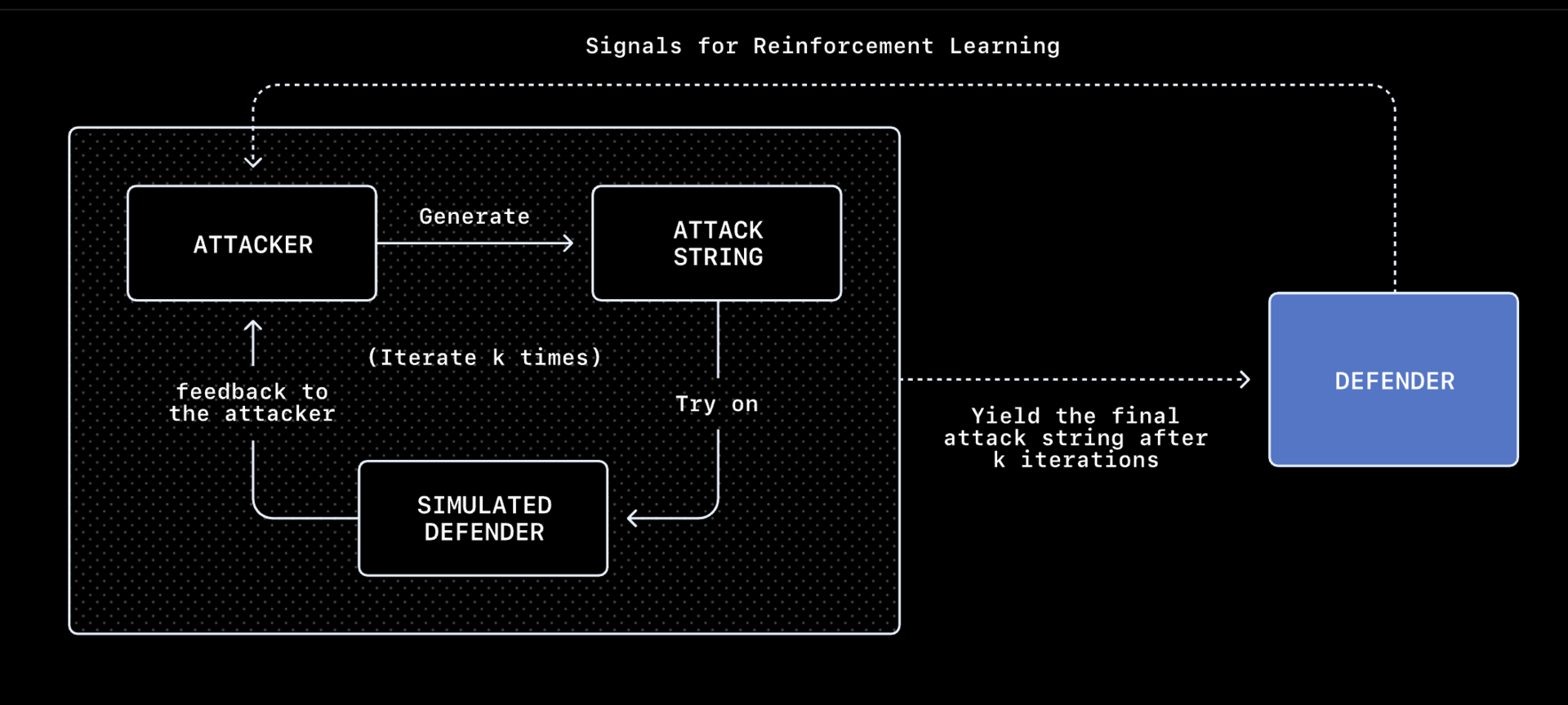
OpenAI details hardening its Atlas AI browser against prompt injection attacks, where malicious web content tricks agents into unintended actions like data leaks or malware downloads. Despite red-teaming, novel training to ignore hidden instructions, and LLM-based automated attackers for testing, OpenAI admits injections remain unsolved. Key defenses: AI monitors for rapid blocking, overlapping guardrails, logged-out mode limiting site access, "Watch Mode" for sensitive sites needing user approval, task-specific data restrictions, and purchase confirmations. Early exploits hit Atlas's Omnibox via tainted URLs; patches deployed fast. Experts warn agentic browsers face systemic risks—Atlas balances autonomy with controls, logging all actions for review. CISO Dane Stuckey: "No perfect defense, but layered approach minimizes harm."
Grok RAG API Unleashed

xAI releases Collections API for Grok, enabling developers to create, manage, and query custom knowledge collections. Users upload documents, PDFs, or web content to build specialized datasets that Grok references for accurate, context-aware responses—ideal for RAG apps. Key features: semantic search, automatic chunking/embedding, real-time updates, integration with Grok's reasoning. Supports enterprise use cases like legal research, financial analysis, customer support. OpenAI SDK compatible (change base URL). Pricing: $5/1M input tokens, $15/1M output. Early access at x.ai/api. Enables "personal Grok" with proprietary data, no fine-tuning needed. Collections persist across sessions, support versioning, metadata tagging, access controls. xAI claims 2x retrieval accuracy vs. basic RAG. Complements Grok's real-time X data access for hybrid public/private knowledge bases.
Manus Now Creates & Edits Slides With Nano Banana

Manus now lets users edit slides created with Google's Nano Banana Pro AI—previously static images only. This breakthrough enables precision tweaks to AI-generated presentations without losing visual quality. Nano Banana Pro (Gemini 3 Pro-based) excels at high-fidelity visuals, multi-image blending (up to 14 refs), text rendering in 100+ languages, infographics, character consistency, and studio controls like inpainting/outpainting. Manus integration preserves these while adding editable text/layout changes. First platform to make Nano Banana outputs fully editable, bridging AI generation + human refinement. Edit bullet points, charts, colors, fonts directly. Supports real-time collaboration, export to PPT/PDF. Announced Dec 18, 2025—solves key AI presentation workflow gap for professionals needing custom tweaks post-generation.
Hand Picked Video
In this video, we’ll look at Infloq, an Influencer Marketing Operating System (OS) built for brands, influencer marketing agencies, media managers, social media managers, creators, and content creators.
Top AI Products from this week
AbleMouse AI edition - In addition to the DIY edition, AbleMouse has gained a new open-source AI module for face-controlled mouse navigation. Now you just need to point your nose at the desired spot on the screen—regardless of the screen's width.
Unreel - Transform any product photo into scroll-stopping video ads in under 5 minutes. Unlike agencies charging $200-500 per video with 3-5 day turnarounds, Unreel.ai lets you generate UGC-style variations to test, kill losers, and scale winners—all for ~$3 per full video.
Filio - Filio is an AI-powered construction photo documentation platform that turns jobsite media into searchable, report-ready evidence. Field teams capture photos, videos, 360 media, scans, and measured visuals on plan sheets or maps. Filio automatically preserves GPS, date/time, bearing, elevation, and weather, then adds AI captions, AI labels, tags, and custom fields.
Instavault 2.0 - Instavault turns your saved Instagram, TikTok, LinkedIn, and X posts into one organised, visual, searchable system. 🎁 Rewind 2025 for your saves - personality type, patterns & comparisons 🕸️ Visualise Me - a knowledge graph of what you actually consume.
The AI Library - The AI Library is a simple way to discover useful AI tools without stress. We curate and review AI products based on real-world use cases. Discover new launches, explore top tools through live leaderboards, utilize our expanding prompt library, and see what people are actually using and recommending.
Kirkify - Kirkify is an AI meme studio that turns photos into bold satirical edits in seconds. Exports come with a built-in satire/AI disclosure label + watermark by default, plus ready-to-post sizes for social.
This week in AI
ChatGPT Year in Review - OpenAI rolls out "Your Year with ChatGPT" recap for US/UK/Canada/NZ/Australia users with memory & history enabled. Shows personalized stats, top chats, trends. Add via + button: "show me my year with ChatGPT." Gradual rollout—check back soon.
Google Launches A2UI - A2UI is open-source protocol for AI agents to generate secure, native UIs across platforms. Agents send declarative JSON (not code) for forms, charts, buttons—rendered by Flutter, Angular, Lit. Works with A2A multi-agent systems, AG UI, Opal, Gemini Enterprise. Streaming updates, trusted components only. Try demos at a2ui.org
ChatGPT Personalization Update - ChatGPT adds controls for warmth, enthusiasm, & emoji use in Personalization settings. Fine-tune tone across all chats instantly—no new threads needed. Proactively suggests updates based on your style prefs. Rolling out now for more natural convos.
RL Learns General Planning Policies - New arXiv paper shows policy gradient methods (actor-critic) learn near-perfect general policies for classical planning benchmarks like Blocks, Gripper using GNNs on state transitions.
Vibe Reasoning Breakthrough - Vibe Reasoning unlocks frontier AI for IMO 2025 P6 (ans: 2112) via meta-prompts, code grounding, & model orchestration (GPT-5 explores, Gemini proves). Humans guide lightly; AI reasons deeply.
Paper of The Day
The paper likely introduces advancements in AI or machine learning, given its recent December 2025 timestamp and alignment with ongoing research in computation and language models, such as enhanced retrieval-augmented generation (RAG) frameworks or domain-adapted extraction pipelines for noisy data like social media posts. These works often focus on improving LLMs' handling of structured data, temporal reasoning, or multimodal inputs through techniques like LoRA fine-tuning, semantic chunking, and hybrid retrieval to boost precision and recall in enterprise or real-world applications. While specific details on this paper are unavailable without direct access, it fits the trend of efficient, privacy-preserving adaptations for edge devices or specialized benchmarks, contributing to scalable AI deployment.
To read the whole paper 👉️ here